IQ, OQ, and PQ qualification
Qualification workspaces organize evidence that the deployed system is installed correctly, operates as specified, and performs for the organization’s intended use.
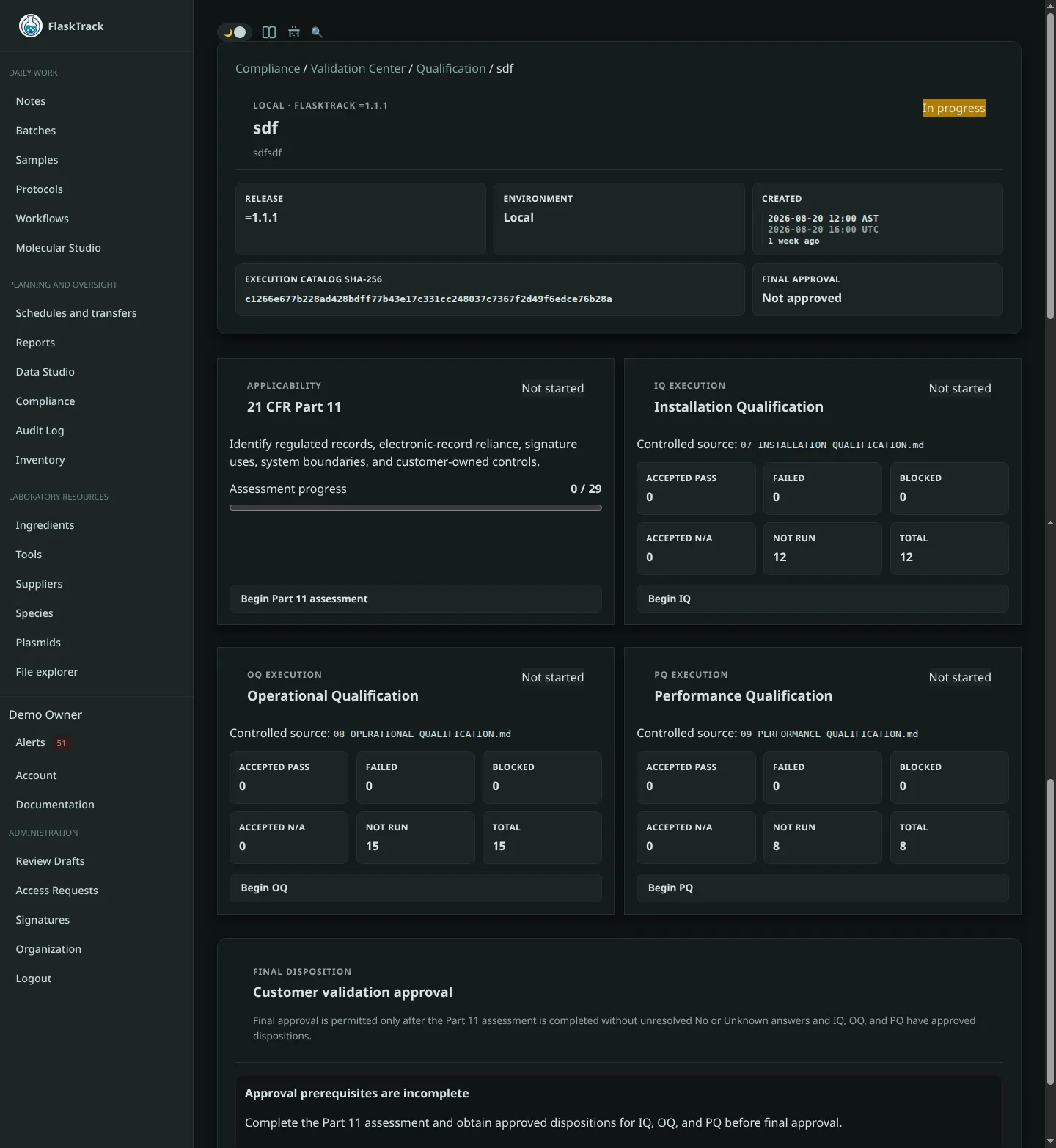
Qualification types
| Type | Focus |
|---|---|
| IQ — Installation Qualification | Environment, deployment, dependencies, configuration, build identity, and installation evidence. |
| OQ — Operational Qualification | Functional controls, security, audit, signatures, error handling, and defined operational requirements. |
| PQ — Performance Qualification | Representative end-to-end use by trained users in the intended operating process. |
Project workflow
A qualification project identifies intended use, environment, release version, test catalog, conclusion, and conditions. Each IQ/OQ/PQ run contains test cases and execution records.
Typical lifecycle:
- Draft the project and confirm scope.
- Execute test cases and attach evidence.
- Mark results as pass, fail, blocked, not applicable, or not run.
- Submit completed executions for review.
- Accept or request changes for each execution.
- Move the run to ready for review.
- Approve, approve with conditions, or reject the run using the required electronic signature.
- Approve the overall project when completion criteria are met.
Evidence quality
Evidence should identify the tester, date, environment, release, expected result, actual result, attachments, deviations, and reviewer decision. A passed result without review may not count as accepted completion.
Deviations and conditions
Document failed or blocked tests, impact, corrective action, retesting, and residual risk. Approval with conditions should state the condition, owner, due date, and operational restriction.