AI-assisted scaffolding
Molecular Studio can use an AI provider configured for your organization to propose a draft project scaffold.
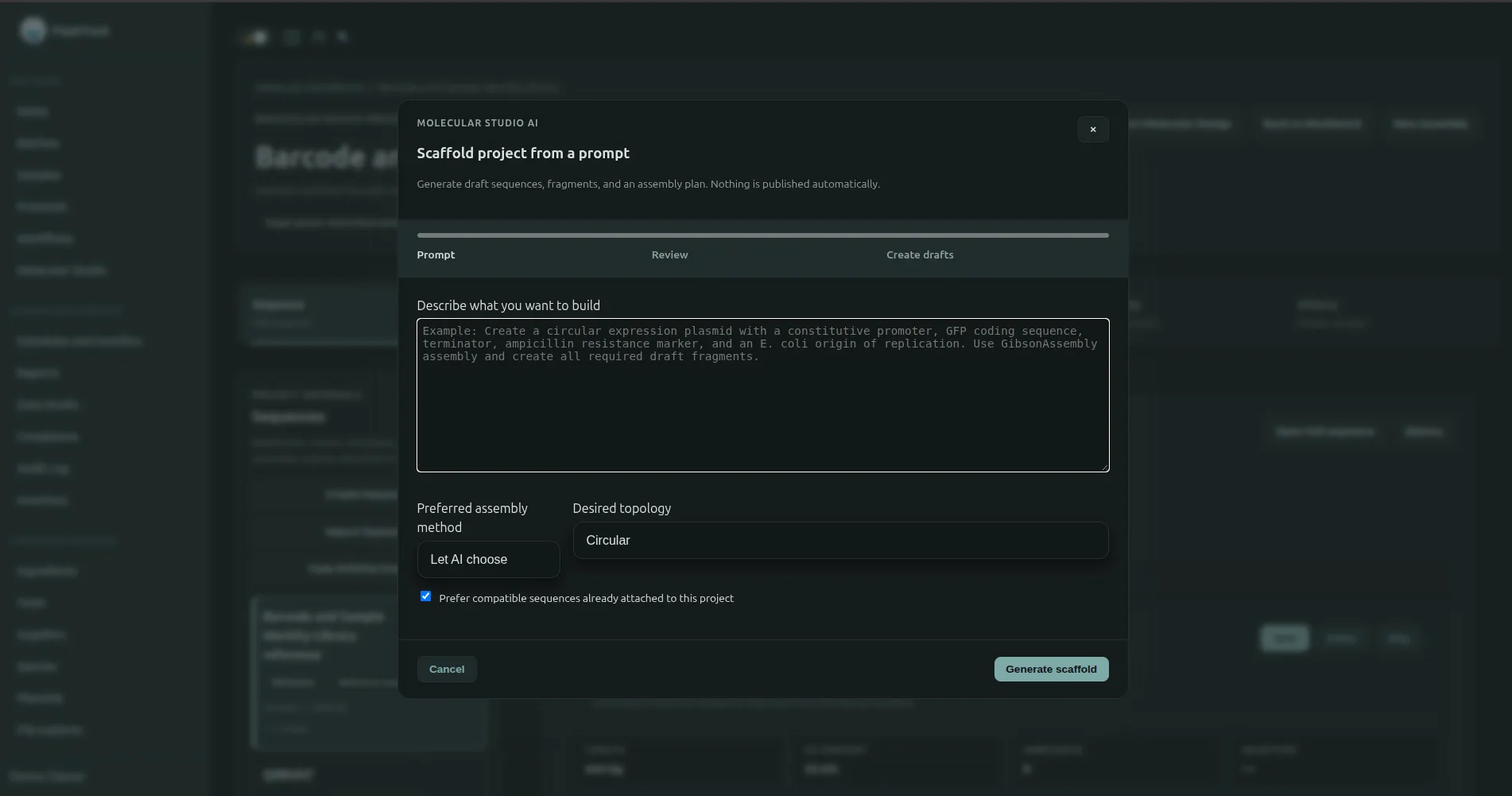
AI scaffolding is intended to reduce setup work, not replace scientific review.
What the AI can propose
Depending on the project and current configuration, a scaffold can suggest a project summary, assembly plan, ordered fragments, fragment roles, bounded draft sequence material, feature intent, and warnings.
FlaskTrack can then perform deterministic operations around the proposed material, including sequence normalization, hashing, coordinate validation, primer calculations, and persistence.
Use existing sequences when possible
If your project already contains authoritative sequences, prefer reusing those exact versions rather than asking the AI to invent replacements.
For known promoters, coding sequences, backbones, regulatory elements, or reference constructs, import or attach the authoritative sequence.
Review every generated result
Before applying an AI scaffold, inspect fragment identity, expected function, sequence content, length, feature type, assembly role, and warnings.
AI output remains draft material until reviewed by a qualified user.
What AI does not establish
AI generation does not establish biological correctness, experimental feasibility, sequence authority, successful assembly, successful transformation, regulatory approval, verification, or release.
Warning
Do not treat generated DNA as an authoritative biological source simply because it is syntactically valid.