Electronic signatures
Electronic signatures are used for selected high-risk actions. A signature confirms that a specific authenticated user authorized a specific action on a specific record at a recorded time.
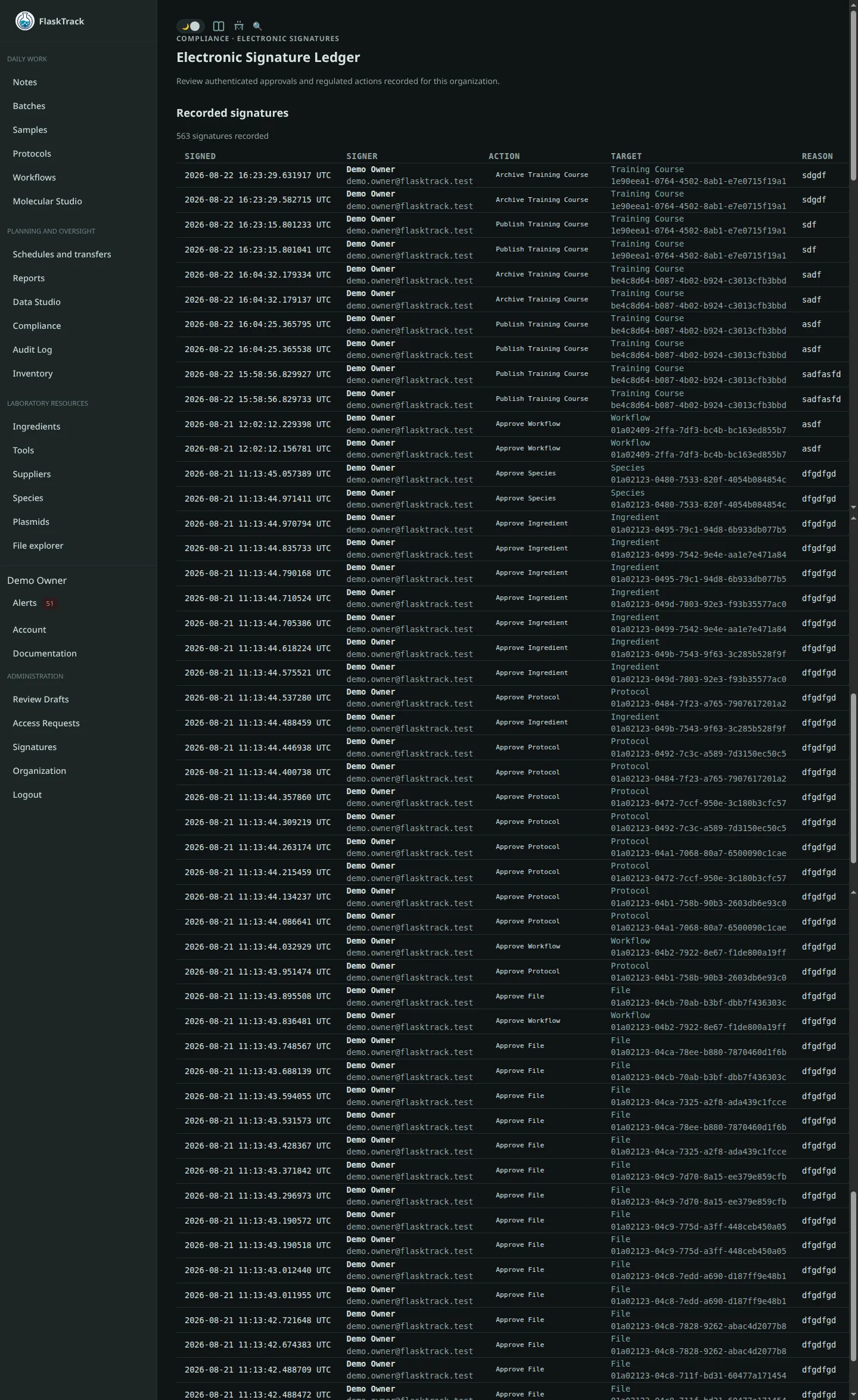
Typical signed actions
Depending on entity state and configuration, signatures may be required for:
- completing controlled protocol or batch steps;
- approving protocols, workflows, batches, files, or catalog records;
- releasing batches;
- reviewing compliance events or access requests;
- approving molecular designs or sequence versions;
- publishing a sequence version;
- verifying primer pairs or assembly designs;
- executing, reviewing, or approving validation qualification activities.
Signature flow
- Start the controlled action.
- Review the entity, action, meaning, and any required reason.
- Reauthorize with the requested credential.
- Submit the signature.
- FlaskTrack records the signature authorization and attempts the action.
A signature is not a general approval for later changes. Editing the signed record may require a new version, review, or signature.
Meaning and responsibility
Organizations should define signature meanings such as performed by, reviewed by, approved by, or released by in controlled procedures. Users must never sign using another person’s credentials.
Failed or interrupted signatures
If authorization succeeds but the underlying operation fails, review the displayed error and audit trail before retrying. Do not assume the action completed merely because a credential prompt was accepted.
Part 11 considerations
Electronic signatures are one component of a Part 11 control environment. Identity management, training, signature policy, record retention, validation, access control, audit review, and procedural controls remain organizational responsibilities.